
When people think about investment risk, they usually picture a bear market, inflation, or rising interest rates.
Those risks are real. But a growing threat has nothing to do with the markets. Instead, it involves convincing good people to willingly hand over their passwords, personal information, or even their life savings.
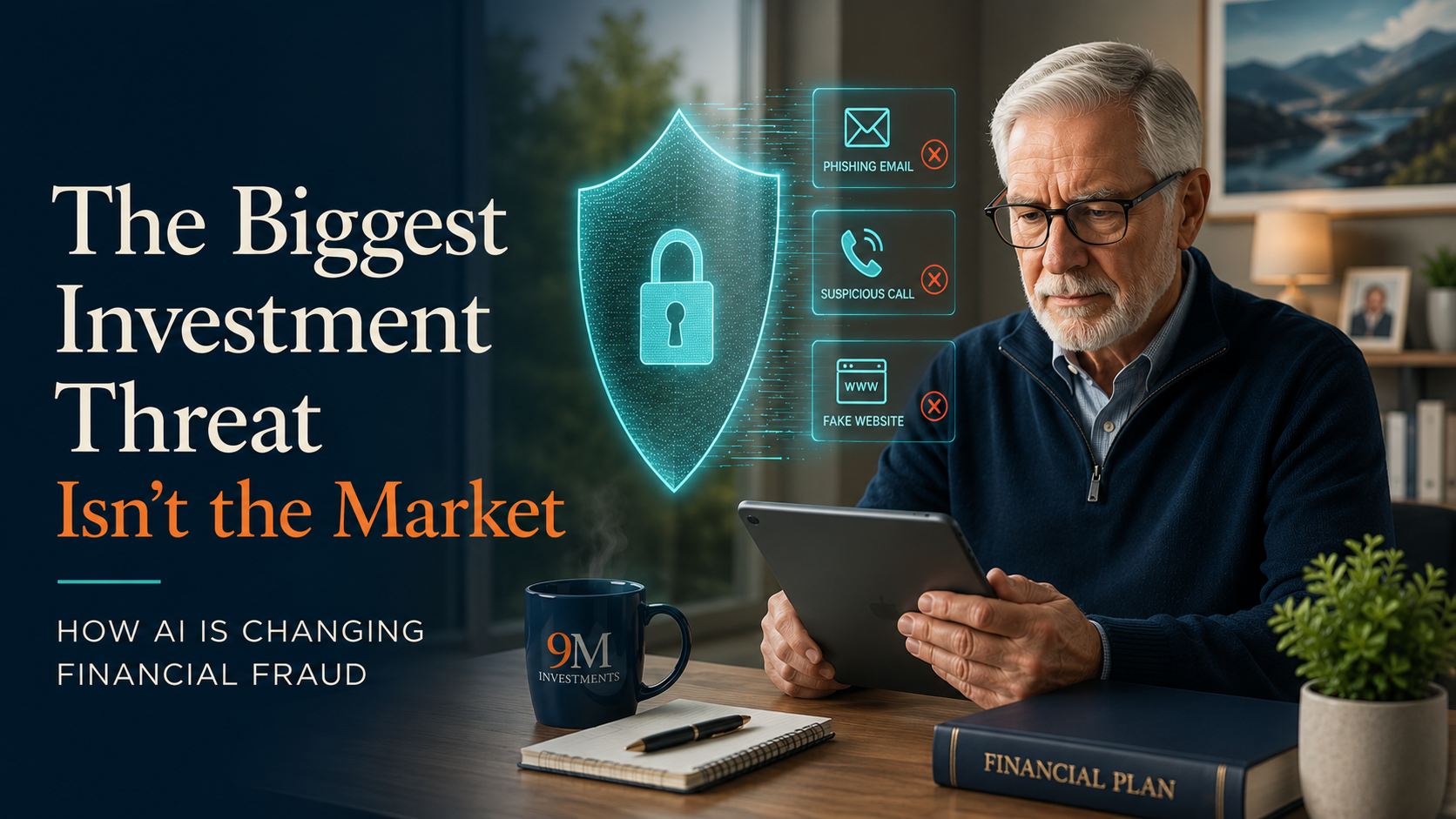
Artificial intelligence has fundamentally changed financial fraud. Criminals can now create convincing emails, clone voices, build fake websites, and automate scams at a scale that wasn't possible just a few years ago. Schwab notes that AI-enabled fraud increased more than 1,200% during 2025, with losses projected to reach $40 billion annually in the United States by 2027.
For retirees and investors, understanding these threats has become just as important as understanding market risk.
AI Didn't Create Fraud. It Made It Better.
Fraud has always existed. What's different today is speed. Years ago, a scammer needed time, technical knowledge, and resources to fool someone.
Today, AI can generate realistic emails, websites, phone conversations, and even cloned voices within minutes. That means criminals can target thousands of investors simultaneously while making every interaction feel personal.
The scams are no longer obvious. They're designed to look legitimate.
Three Scams Every Investor Should Know
1. Voice Phishing (Vishing)
Imagine receiving a phone call from someone claiming to be your financial institution or technology provider.
They already know your name. They know where you invest. Caller ID appears legitimate.
They explain there has been suspicious activity on your account and ask you to verify your login credentials or read back the authentication code sent to your phone. Within minutes, they may have complete access to your accounts.
Schwab highlights this exact scenario as one of the fastest-growing threats facing advisory firms today.
2. Fake Websites
Many investors assume the first Google result is legitimate. Unfortunately, criminals know this too.
Fraudsters create nearly identical websites and use search engine manipulation to get them near the top of search results.
One incorrect click can hand over usernames, passwords, and multi-factor authentication codes before you even realize something is wrong.
3. Malware Hidden in Everyday Emails
Not every dangerous email asks you for money. Sometimes it simply asks you to open an attachment or click a Zoom invitation.
Behind the scenes, malicious software may quietly install itself and begin recording keystrokes, emails, and account activity for weeks before criminals act.
Why Retirees Are Increasingly Targeted
Retirees often have characteristics criminals actively seek:
- Larger account balances
- Multiple financial accounts
- Established credit
- Predictable income
- High trust in institutions
- Less familiarity with newer AI technologies
This isn't about intelligence. It's about probability.
Criminals target where the money is.
Practical Steps to Protect Yourself
Fortunately, most scams succeed because someone is caught off guard—not because the technology is unbeatable.
Simple habits dramatically reduce your risk:
- Never provide passwords or authentication codes over the phone.
- Type financial websites directly into your browser instead of clicking links or relying on search results.
- Enable multi-factor authentication on every financial account.
- Use unique passwords stored in a password manager.
- Keep your computer and phone updated.
- If something feels urgent, stop and independently verify the request using a known phone number.
Schwab also recommends regular cybersecurity training, reviewing cyber protections, maintaining updated software, and limiting unnecessary software installations.
Final Thought
Markets will always experience periods of volatility.
Fraud is different.
Unlike a market decline, money lost to a successful scam is often difficult—or impossible—to recover.
Protecting your retirement means managing both investment risk and human risk.
That's becoming one of the most important parts of financial planning.
This content is developed from sources believed to be providing accurate information. It may not be used for the purpose of avoiding any federal tax penalties. Please consult legal or tax professionals for specific information regarding your individual situation. The opinions expressed and material provided are for general information, and should not be considered a solicitation for the purchase or sale of any security.