
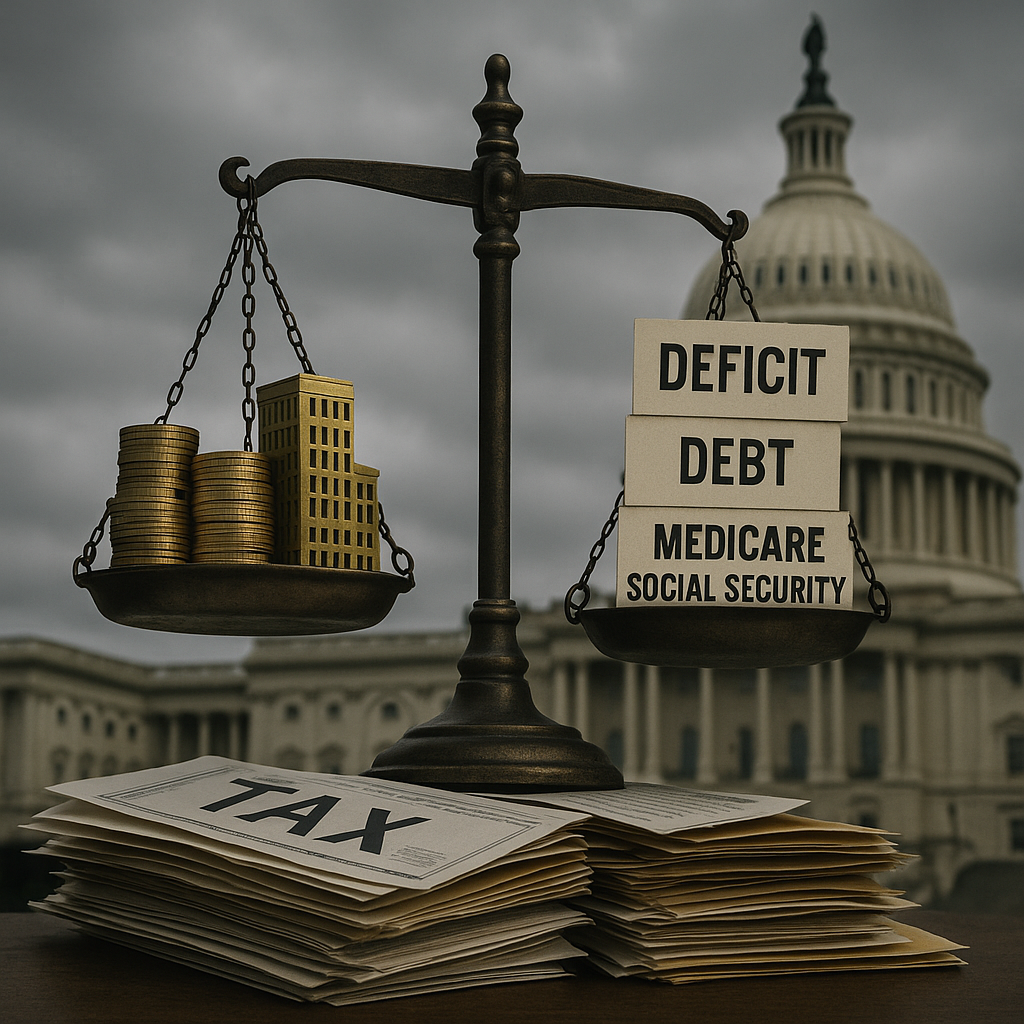
The Long-Term Tax Reform Impact on the National Economy
You might have heard that another wave of tax changes is coming down the pipes. As with most things in finance, the true tax reform impact always comes down to the smallest details. While the legislative environment changes daily, it is crucial to discuss the broader implications of these fiscal shifts. At 9M Investments, we believe that informed advice is the only way to navigate these complicated "murky" waters.

Evaluating the Economic Tax Reform Impact: Do We Need a Cut?
When politicians discuss new legislation, they often promise that the primary tax reform impact will be "jobs, jobs, jobs." However, historical data often tells a different story.
In 2004, the American Jobs Creation Act allowed the repatriation of foreign profits. While the goal was to stimulate the U.S. workforce, the top 15 repatriating corporations actually reduced their overall headcount by over 20,000 jobs. Instead of hiring, the funds were largely used for stock repurchases and executive compensation. Based on this knowledge, it’s clear that a massive corporate break doesn't always translate into a positive tax reform impact for the average worker.
How Tax Reform Influences National Debt and Yearly Deficits?
Of course, we all want to pay less in taxes. But as a fiduciary based in Grapevine, Texas, I have to ask: what are we willing to give up to get there?
If we look at our current spending, the projected yearly deficits remain staggering. Even before calculating the cost of new cuts, we are deep in a fiscal hole. The tax reform impact of lost revenue estimated in the trillions over the next decade only adds to a national debt that is already exceeding $38 trillion. Without concurrent spending cuts, we are essentially redistributing resources from future generations to the present.
Analyzing the Individual vs. Corporate Tax Reform Impact
To understand the true weight of our fiscal policy, we must look at who pays the bills. Currently, individual income taxes bring in nearly half of all federal revenue, while corporate income taxes make up a much smaller slice roughly 11%.
When analyzing the historical tax reform impact, it becomes clear that corporations may have the most "slack" to make up. While a competitive tax rate helps American companies succeed in a "dog-eat-dog" world, we must find a balance that pays the national bills without overburdening the individual taxpayer. This is why a proactive tax planning strategy is vital for your personal wealth preservation.
Could Real Reform Ever Happen?

In a dream world, we would see a tax reform impact that eliminates complex deductions in favor of lower, flatter rates that coincide with zero deficits. Unfortunately, special interests and political divides often keep these ideas in committee.
The closest we’ve come was the Simpson-Bowles Plan, which addressed the national debt, Social Security, and Medicare. However, it was hated by both sides of the aisle. Because the system is unlikely to fix itself, you must take control of your own situation. We recommend a Free Retirement Assessment to ensure your long-term plan can withstand the inevitable shifts in the tax landscape.